Showing posts with label disease. Show all posts

Thursday, May 1, 2014

Return of the Fungi!

Things have been relatively quiet here at the NC State Turf Diagnostics Lab with regards to disease samples, however that has changed in the past couple of weeks now that warm-season turfgrasses are starting to fully wake up from their winter nap. So, without boring you to death with blah blah this and blah blah that ... here's the rundown.

Warm-Season Turf (Bermuda/Zoysia/Centipede)

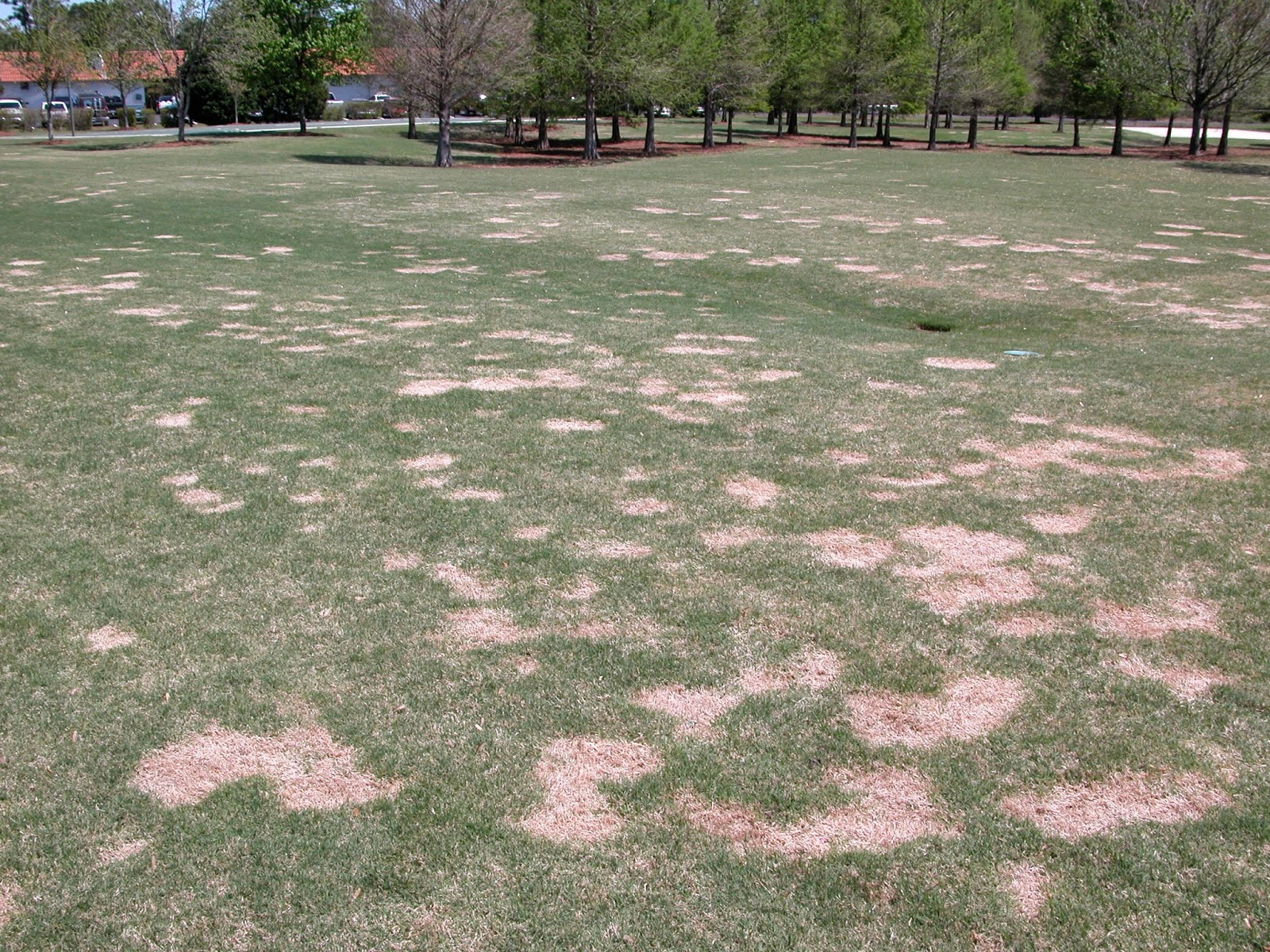
Many samples have been submitted both digitally and physically to the clinic over the past few weeks that have shown winter damage. The majority of these samples were taken from shady, wet, and/or north facing slopes. These are typical areas we expect to see this type of damage on warm-season turfgrasses. In most cases, it appears that green up has been delayed and no complete turf losses have been reported. The exception to that has been centipedegrass. We have seen some centipede lawns that we can't find any disease, insect, nematode, soil problem, etc. where winter kill is strongly suspected. This is all unfolding as I type this, so we may see cases of other warm season turfs with winter kill as they continue to fully green up across the state. For more information about winter injury in North Carolina, please read Dr. Grady Miller's recent post by clicking here.

From a disease standpoint, the most common diagnosis in the past week or so has been spring dead spot on bermudagrass. This has been documented on common, hybrid, and ultradwarf types. Given the fact that spring dead spot is highly correlated with cold injury, it is no surprise that there is a lot of spring dead spot damage out there this year in North Carolina. There is nothing you can do from a fungicide standpoint at this time to recover from this disease because the damage was done last fall. For more information about spring dead spot, please click here.

Spring dead spot symptoms on ultradwarf bermudagrass
Spring dead spot symptoms on hybrid bermudagrass
Typical winter kill symptoms on warm season turf


Cool-Season Turf (Bentgrass & Ryegrass)

As expected, we haven't seen many cool-season turf samples in the past few weeks since they are able to withstand the ravages of fungi for the most part in the spring and fall.

One exception has been red leaf spot, caused by the fungus Drechslera erythrospila, on creeping bentgrass putting greens. This is a disease we have observed over the past several years. For the most part, it has been fairly random and isolated, however we are starting to see more and more of this disease for whatever reason. If you think you have red leaf spot, now is the time to treat. None of the samples that have come into the clinic are producing spores yet. This tells us that while the fungus is waking up and starting to infect via mycelium spread, it hasn't reached it's full potential to produce abundant spores. Once spores are produced, the damage will be more widespread and rapid. For more information about red leaf spot, click here.

Red leaf spot symptoms on a creeping bentgrass putting green

Finally, we have observed some dollar spot damage on perennial ryegrass in over seeded situations. Recent weather patterns have been favorable for this fungus to start coming out and eating away at our precious stands of perfect turf, so beware! If you haven't started your preventative dollar spot programs, now's the time ... especially on high value turf like creeping bentgrass. For more information about dollar spot, click here.

Dollar spot symptoms on perennial ryegrass

Thursday, August 1, 2013

What Disease?

If I had a wooden nickel for every time someone has said the following to me in the past few weeks, I'd be able to build a raging fire ... "I bet you are swamped with samples in the clinic right now with all the rain we've had, etc. etc., etc." Actually, outside of a few oddball cases, we haven't seen or heard of any major disease problems on creeping bentgrass putting greens. The missing link has been heat stress. If we look back at our records, some of our busiest years have been those that were hotter and drier which ultimately leads to more stress on the plant therefore making them weaker and more susceptible to infection by pathogens.

One of the oddball cases we have diagnosed in the past couple weeks has been summer patch on creeping bentgrass putting greens. The symptoms of summer patch appear as circular patches or rings, ranging from 6 inches to 3 feet in diameter. Turf within these patches initially turns off-colored, is prone to wilt, grows poorly, and may appear sunken in the turf stand. Over a period of a few weeks, the turf continues to decline, turns yellow or straw brown and eventually collapses to the soil surface. The outer edges of the patch are usually orange or bronze when the disease is actively developing. The patches recur in the same spot annually, and can expand at a rate of 2 to 4 inches per year.

Summer patch symptoms on creeping bentgrass


The summer patch fungus attacks the roots, stolons, and rhizomes in the spring when soil temperatures reach 65°F. Summer patch symptoms are rarely seen during the early stages of disease development, instead, the symptoms appear in mid-summer after considerable damage has been done to the root system. Heat, drought stress, and nutrient deficiencies are the main factors that encourage the expression of summer patch symptoms. In North Carolina, the symptoms typically appear in early to mid-July.

For more information about summer patch, including control recommendations, click here.

Finally, if any of you are wondering about Pythium root rot, we have only diagnosed a handful of cases thus far with all of those happening within the past 7-10 days. In every case, we have found the Pythium to be active in the upper thatch layer around roots closest to the plant. With that being said, if you are treating for Pythium root rot, don't water those fungicides in TOO much. We typically recommend about an 1/8" ... which in most cases equals about 3-4 minutes with part circle heads. Either way, you may want to take the time to see just how long it takes to put that amount out.

Pythium root rot following drainage route

For more information about Pythium root rot, including control recommendations, click here.


Tuesday, June 11, 2013

Guess What Now?? Brown Patch Blasting Tall Fescue in NC!


June is in full swing and so is brown patch in tall fescue lawns and landscapes.  Brown patch, caused by the fungus Rhizoctonia solani, is the most common disease in tall fescue during late spring and throughout the summer months in North Carolina.  Brown patch infections can start as early as April in some years with full blown outbreaks occurring by late May and early June in most years.  As the name implies, symptoms are brown to tan areas of turf that are roughly circular patches that range from a few inches to several feet in diameter.


Brown Patch Lesion on Tall Fescue Leaf

The two most common mistakes managers of tall fescue make are fertilizing too late or too much in late spring and over watering.  Tall fescue should not be fertilized after the first of May, unless you are using ultra low rates (< 0.25 lb N/M) with iron for a color effect.  The recommended amount of nitrogen on tall fescue per year is 3-4 pounds per 1,000 square feet.  Most people will apply a pound or two in the fall and a pound or two in the spring.  When in doubt, submit a soil test to ensure you're feeding your lawn the right nutrients at the correct amounts.

Watering should be done only as needed to prevent drought stress.  When you do apply irrigation, do it deep and infrequent instead of watering every day.  It is a common mistake for homeowners to set their irrigation system on a schedule and forget about it.  Remember, fungi love water and if you over water, you're giving the advantage to the fungi, not the turfgrass.  The ideal time to water your lawn is in the early morning hours before sunrise.  Irrigating during late afternoon or early evening is the worst thing you can do because this extends the leaf wetness period, however brown patch will love you for it!

Symptoms of Brown Patch in Tall Fescue

Need help knowing when and how much to water your lawn?  Try out our online water management tool at the following link.

http://turf-ims.ncsu.edu/

For more information about brown patch, including control recommendations, please visit the following link.

Wednesday, January 30, 2013

Winter Patch Diseases Now Flocking!

Recent weather patterns, as weird as they may be, have been favorable for two common winter time diseases to start showing up across portions of North Carolina. They are Microdochium patch (a.k.a. pink snow mold) and yellow patch (cool weather brown patch).

As most of you know, Microdochium patch doesn't require snow cover and isn't necessarily pink in color, although if you look at the picture below, you can see that the mycelium does indeed have a pinkish tone. Infection areas may start out as small as 2" in diameter and expand up to 12" over time. The leading edge of the patch may have a reddish brown or salmon color and the leaves in the middle will be collapsed and matted upon themselves. Also, this fungus is a heavy spore producer, so the damage may appear as if it has been spread or smeared by mowers, equipment, water, etc.

For more information about Microdochium patch, including control recommendations, click here.

Pinkish Flock of Microdochium Mycelium
Microdochium Patch

Microdochium Patch

Yellow patch is a very common disease of cool season turfgrasses this time of year and typically causes irregular patches up to 3 feet in diameter that are yellow in color. On creeping bentgrass putting greens and other lower cut turfgrasses, it reminds me of sweat rings in an old ball cap.

For more information about yellow patch, including control recommendations, click here.

Yellow Patch on Creeping Bentgrass

Yellow Patch on Ryegrass

Friday, August 24, 2012

15 Minutes of Fame for Leaf Spot


After looking back through prior alerts and posts, I discovered that leaf spot diseases have never made the cut, until now.  Recent weather patterns of cloudy and rainy weather across much of North Carolina have been perfect for foliar diseases such as Bipolaris leaf spot and gray leaf spot.

Bipolaris Leaf Spot on Bermudagrass


We have received several samples of bermudagrass in the past week that were devastated by the fungus Bipolaris cynodontis. Bipolaris leaf spot is most severe on turf that is growing slowly due to adverse weather conditions or improper management practices.  Shaded areas with little or no air movement result in weak turf and extended periods of leaf wetness that favor disease development. Deficient or excessive nitrogen, excessive thatch, extended periods of leaf wetness, drought stress, and low mowing heights are factors that encourage the development of leaf spot diseases.  These fungi may spread to the crowns and roots and cause melting out, which is most severe during periods of hot weather.  For more information about leaf spot, including control recommendations, click here.


Gray Leaf Spot on St. Augustinegrass


We have also received several samples of gray leaf spot on St. Augustinegrass here at the NC State TDL. Proper mowing practices are most important for gray leaf spot management in St. Augustinegrass. This grass must be mowed frequently during the summer months to remove excess leaf tissue, keep the canopy open and dry, and remove developing gray leaf spot lesions. Collecting clippings reduces spread of the disease when gray leaf spot symptoms are evident. Apply nitrogen and other nutrients as recommended to maintain vigorous foliar growth during the summer months. Excessive shade, in addition to promoting leaf wetness, slows St. Augustinegrass growth and enhances gray leaf spot problems. For more information about leaf spot, including control recommendations, click here.

Monday, July 23, 2012

The Rundown


After a relatively quiet June at the NC State Turf Diagnostics Lab, turf samples have been rolling in during the month of July. Right after the record breaking heat wave experienced by North Carolina and much of the country, it seemed as if delivery trucks were backing up and dumping cardboard boxes of all shapes and sizes chocked full of ailing turfgrass samples.

One of the most common questions I get from golf course superintendents that I speak with on a weekly basis is "What are you seeing in the lab?" Well, here you go! Here's a rundown of the most common diagnoses we've made over the past two weeks.


Creeping Bentgrass Putting Greens
  1. Pythium root rot
  2. Fairy ring
  3. "Warm-weather" brown patch (Rhizoctonia zeae)
  4. Yellow spot
  5. Anthracnose

Home Lawns

Zoysiagrass
  1. Curvularia leaf spot
Bermudagrass
  1. Heat/drought stress
Tall Fescue
  1. Brown patch


Wednesday, June 20, 2012

Summer Solstice Welcomes Brown Patch

June is in full swing and so is brown patch in tall fescue lawns and landscapes.  Brown patch, caused by the fungus Rhizoctonia solani, is the most common disease in tall fescue during late spring and throughout the summer months in North Carolina.  Brown patch infections can start as early as April in some years with full blown outbreaks occurring by late May and early June in most years.  As the name implies, symptoms are brown to tan areas of turf that are roughly circular patches that range from a few inches to several feet in diameter.


Brown Patch Lesion on Tall Fescue Leaf


The two most common mistakes managers of tall fescue make are fertilizing too late or too much in late spring and over watering.  Tall fescue should not be fertilized after the first of May, unless you are using ultra low rates (< 0.25 lb N/M) with iron for a color effect.  The recommended amount of nitrogen on tall fescue per year is 3-4 pounds per 1,000 square feet.  Most people will apply a pound or two in the fall and a pound or two in the spring.  When in doubt, submit a soil test to ensure you're feeding your lawn the right nutrients at the correct amounts.

Watering should be done only as needed to prevent drought stress.  When you do apply irrigation, do it deep and infrequent instead of watering every day.  It is a common mistake for homeowners to set their irrigation system on a schedule and forget about it.  Remember, fungi love water and if you over water, you're giving the advantage to the fungi, not the turfgrass.  The ideal time to water your lawn is in the early morning hours before sunrise.  Irrigating during late afternoon or early evening is the worst thing you can do because this extends the leaf wetness period, however brown patch will love you for it!

Symptoms of Brown Patch in Tall Fescue

Need help knowing when and how much to water your lawn?  Try out our online water management tool at the following link.

http://turf-ims.ncsu.edu/

For more information about brown patch, including control recommendations, please visit the following link.


Wednesday, April 25, 2012

Severe Large Patch Outbreaks in NC


You know it's officially spring in North Carolina when there are giant patches of brown grass in bermudagrass, centipedegrass, St. Augustinegrass, and zoysiagrass. These giant patches of brown grass are better known as large patch, caused by the fungus Rhizoctonia solani, and if you've ever had an outbreak of this disease, you now know why the disease was coined large patch.

What you may not know however, is what your control options are this time of year. You shouldn't worry too much if you have this disease on bermudagrass. Bermudagrass tends to grow out of the damage once the temperatures are consistently warmer and the daylight longer.

As for our other warm-season friends, damage tends to be most severe on centipedegrass and recovery may take all summer in extreme cases. Unfortunately, there isn't much you can do to make for a magical recovery. We rarely recommend fungicides for large patch in the spring of the year, however in worst case scenarios, a fungicide application might help prevent the disease from spreading further. Fungicide applications are best when they are applied preventatively in the fall. If you choose to spray a fungicide this spring, don't expect a miracle to happen overnight. Also, remember that recovery will be even slower and tougher if you've applied a DNA type of herbicide as your pre-emerge for summer weeds.

In most cases, the best thing is to stay the course with management practices that will encourage each type of grass to do well. In severe cases, treating damaged areas like a new establishment with light and frequent fertilizer and water inputs may help encourage faster lateral spread. This doesn't mean you should apply more fertilizer, just smaller doses more often. Applying too much fertilizer will make the disease worse this fall!

Finally, be sure to map the affected areas now while they are clearly visible. You will save yourself some money this fall by spot treating these areas instead of having to make a whole property application, since the disease tends to reappear in the same areas.

For more information about large patch, click here.

For more information about warm-season grass maintenance, click here.

Thursday, September 15, 2011

It’s Almost Time to Prevent Large Patch!


With soil temperatures starting to approach 70°F across portions of NC, now is the time to start thinking about treating for large patch.

Average Daily Soil Temperature on 9/14/11 from the NC State Climate Office

Large patch, which is caused by the fungus Rhizoctonia solani, is a common disease of centipedegrass, St. Augustinegrass, zoysiagrass, and bermudagrass grown for lawns, landscapes, golf turf, and athletic fields. Centipedegrass and St. Augustinegrass are particularly susceptible to this disease.

Symptoms of large patch appear in roughly circular patches from 2 feet up to 10 feet or more in diameter. The affected turf will initially be orange, yellow, or reddish-brown in color but will then turn tan and collapse to the ground. The disease can spread rapidly to encompass large areas of turf, and distinct circular patches may not be obvious in these cases.

Fungicides are available for large patch control, but they must be applied preventatively for best results. The first application should be made in the late summer or early fall when average daily soil temperatures are 70°F or below. Depending on your location and weather patterns, this can be anywhere from late August to late September.

One fungicide application will control minor cases of large patch, but two to three applications on a 4 to 6 week interval may be needed to control severe cases. Fungicides are not very effective once the symptoms of large patch appear. Curative applications will help to reduce further spread of the disease, but the affected turf will be very slow to recover.

Click here for more information about Large Patch, including images and specific control recommendations.

Friday, July 8, 2011

Update on Bacteria in Creeping Bentgrass Greens


In the last month, we've observed significant amounts of bacteria in 32 creeping bentgrass samples submitted to the Turf Diagnostics Lab. We isolated the bacteria in these samples and are identifying them by DNA sequencing and other techniques.

The good news first: the majority of samples contained bacteria that are known to be non-pathogenic to turf. We suspect that these bacterial infections occurred during aerification and topdressings performed after Memorial Day when it was very hot and humid. These non-pathogenic bacteria are not killing the plant directly but may be speeding up the dieback of leaves or tillers that were injured by these stressful practices.

We did isolate the plant pathogenic bacteria Acidovorax from 7 locations, most of which are in the Piedmont of North Carolina. The samples that contain Acidovorax are showing the symptoms of chlorosis, etiolation, and gradual thinning that I wrote about in previous posts. The caveat is that we're not isolating Acidovorax from all of the locations where these symptoms are present. As a result, we cannot be sure that this bacteria is the true cause of the symptoms.

Results from trial on L-93 in Raleigh. Rates are per 1000 sq ft.
We have ongoing trials at 2 locations where Acidovorax is present, and our preliminary data is presented here. First, a word on our rating scale. These ratings are on a 0 to 9 scale, where 0 equals no disease, 1 to 3 represents varying degrees of chlorosis, 4 to 6 represents chlorosis with varying degrees of thinning, and 7 to 9 represent severe thinning of the turf.

Results from trial on G-2 in Charlotte. Rates are per 1000 sq ft.
While we haven't found a silver bullet yet, we have noticed that Signature treatments seem to be helping. In the Raleigh trial, 8 oz of Signature applied 3 times has prevented the turf from thinning, although some chlorosis and etiolation is still evident. In the Charlotte location, plots treated with 8 oz of Signature 3 times have improved slightly, while all other plots have continued to thin.

Before you complain about the price of an 8 oz Signature spray: we don't set the prices, we're just trying to find something that works. We are continuing to evaluate other products and practices that may help to control this problem and will post regular updates on this blog as we learn more.

One important take-home message: just because a diagnostic lab sees bacteria in your bentgrass doesn't mean you have a bacterial disease. Most of the samples we've received have only contained non-pathogenic bacteria. The bacteria has to be isolated and identified in order to determine if it is a plant pathogen.

Thursday, June 16, 2011

Suspected Bacterial Disease of Creeping Bentgrass


Over the last two weeks, the Turf Diagnostics Lab at NC State received several samples of a suspected bacterial disease on bentgrass putting greens. All of the affected golf courses have been in the Piedmont region, from Raleigh to Greensboro to Charlotte.


Most locations are reporting yellowing and etiolation of the bentgrass followed by a slow thinning. The symptoms are relatively mild in these locations. Two courses experienced a more rapid and widespread decline. In all cases, the symptoms are limited to areas that were severely damaged last year by heat stress or other diseases.

We are working to isolate and identify the bacteria associated with these samples. Since there are bacteria in almost every turf sample we receive, we need to determine if the bacteria are pathogenic before we can be sure that they are the cause of the problem.

In the meantime, golf course superintendents who are seeing these symptoms are advised to avoid abrasive practices like aerification, verticutting, and topdressing. If the symptoms are localized to cleanup passes or certain greens, then dedicate a mower to those areas or wash the mower thoroughly and spray it with a 10% bleach solution before moving to other greens. Mowing affected areas last after the dew has dried or spraying with a hydrogen peroxide solution before mowing may also help to minimize the spread of bacteria.

In addition, anything that can be done to minimize stress on the turf is advised; for example raising mowing heights, switching to solid rollers, or skipping mowings on affected areas.

We are investing all of our effort and resources into determining the cause of this problem and developing a practical solution. We have initiated trials at 4 golf courses to evaluate practices that may help to control it. Be sure to follow our blog or sign up for email alerts to receive regular updates:

Like us on Facebook: facebook.com/turfpathology

Follow us on Twitter: twitter.com/ncturfpathology

Receive alerts by email: feeds.feedburner.com/turfpathology

Wednesday, May 11, 2011

Program '11 Project: Here are the programs


As part of the Program '11 Project, we will be evaluating several popular fungicide programs for creeping bentgrass greens, and comparing them to a program that we developed for our specific location (NC State Program) and another program that is modified based on this year's weather conditions (Program '11).

You can find all of the details of each program by following the links below:


We'll be providing regular updates during the season on the performance of these programs and how we've adjusted Program '11 based on this year's weather conditions.

For more information about our Program '11 Project, or to follow along on Facebook or Twitter, please visit our website turfpathology.org.

Thursday, March 24, 2011

Pythium Root Dysfunction Alert


Multiple cases of Pythium root dysfunction, caused by Pythium volutum, have been confirmed in our lab from golf courses with creeping bentgrass putting greens throughout the Piedmont and Coastal Plains of North Carolina. The warmer than usual weather conditions have warmed the soil temperatures well into the optimum range for PRD development.

If you've had problems with PRD in the past, then you should have already started your preventative program. Don't worry if you haven't, there's still time to correct this issue before summer arrives. Remember, this is a ROOT DISEASE, therefore you must WATER-IN your fungicide applications to be successful!

For more information about PRD, including specific control recommendations, click here.

Monday, March 21, 2011

Introducing Program '11: The best fungicide program for your putting greens

Developing a fungicide program for putting greens is becoming increasingly complex, thanks mostly to an explosion in the number of products available to turf managers. When I came to NC State in 2002, I think there were about 60 different fungicide products available in the turf market. Now there are at least 120. It's enough to make your head spin.

It's little wonder that many golf course superintendents have gone toward 'canned' fungicide programs developed by university researchers or crop protection companies.

The problem with these programs is that every golf course is different. Just because a program works well on my research green in Raleigh doesn't mean it will work well on your greens. Different environments, microclimates, management practices, cultivars, construction methods, etc. - all of these things influence the potential for diseases to develop.

Furthermore, every year is different. The activity of a given disease can shift by a month or two depending on the weather conditions. Fungicide programs cannot be inked on the calendar and followed like a prescription. They have to be constantly tweaked and adjusted based on the hand that Mother Nature deals you.

So what is Program '11? This is a fungicide program that is specifically tailored for your putting greens, and adjusted for the specific conditions of 2011.

Over the next 6 months on this blog, we'll be chronicling a field experiment where we compare the performance of different fungicide programs, including one dubbed Program '11.  Program '11 was specifically designed for our research green and will be adjusted during the season based on the weather conditions. Along the way, we'll take a more detailed look at how you can develop and implement effective fungicide programs for your putting greens.

You can follow our progress in a number of ways -  choose one or all!

Visit our website! turfpathology.org/pages/program11.aspx

Like us on Facebook: facebook.com/turfpathology

Follow us on Twitter: twitter.com/ncturfpathology

RSS Feed for Email or Google Reader: feeds.feedburner.com/turfpathology

Wednesday, March 9, 2011

Is Emerald a poor curative for dollar spot control?


Over the years, I've heard a number of people say that Emerald is a slow or poor fungicide for curative control of dollar spot. I must confess that I've never understood what everyone is talking about.

Given that boscalid, the active ingredient in Emerald, controls fungi by depleting their energy reserves, it makes sense that it might be a little slow to work on a curative basis. However, in reality, I've always been impressed with it's activity on both a preventive and curative basis.


Let's look at a couple of examples. In this first curative dollar spot control study, we had an average of 40 to 45 dollar spot infection centers in each plot before initiation of treatments. That's not a huge amount of dollar spot on a 20 square foot plot, but certainly enough to warrant a curative fungicide application in a golf course setting.

On July 20, just 5 days after applying the low rate of Emerald, we reduced the number of infection centers down to 2 per plot, whereas the number in untreated plots held constant. So, the low rate of Emerald reduced dollar spot incidence by 95% in 5 days. I'd consider that to be pretty good curative activity! If you're expecting more than this out of a curative application, then you are probably expecting too much.


Looking at some older data, in 2006 we evaluated Emerald, Daconil + Emerald, and Daconil + Banner for curative dollar spot control. In this case, the dollar spot pressure was much more intense, with 150 to 200 dollar spot infection centers per plot before the initiation of treatments. After the first application on 19 Jun, dollar spot incidence declined in all of the treatments at a similar rate and none of the treatments were disease free until three weeks later on 10 Jul. And this is even though dollar spot disease pressure was much lower during late June and early July, as evidenced by the decline in the amount of disease in untreated plots.

Curative control of any disease is more dependent on the level of disease pressure, the amount of turf injury present, and the growth rate of the turf after the application. Which fungicide is applied probably isn't that important in most cases. In order for the disease symptoms to go away, the turf has to grow out of the symptoms and spread into the damaged areas. This, of course, takes time. There aren't any fungicides that will make dollar spot go away over night.

For a lot of reasons, we don't recommend controlling dollar spot on a curative basis. Perhaps the most important reason is that curative applications increase the risk for fungicide resistance to develop. If you find yourself in a situation where you need to make a curative application for dollar spot control, be sure that you are tank-mixing with chlorothalonil to reduce the potential for resistance to develop. This is especially important for products with a high resistance risk like Emerald.

Wednesday, February 9, 2011

Watch for winter symptoms of Pythium root dysfunction


Symptoms of Pythium root dysfunction, caused by Pythium volutum, may be expressed this time of year during dry, warm, and/or windy days. This is especially true for newer putting greens or those with low organic matter. Patch type symptoms are typical, however ring type symptoms have been observed.

This pathogen infected your root system last fall and it's those affected plants that will be the first to exhibit symptoms of drought stress. Observing these patches doesn't necessarily mean that the pathogen is currently active, however it does mean that you will have to battle this disease in late spring/early summer if you don't take preventative measures once the daily mean soil temperatures reach 50 degrees Fahrenheit this spring.

For more information about PRD, click here.

Monday, February 7, 2011

How to submit a sample to the Turf Diagnostics Lab

This video will show you how to collect and submit a sample to the NC State Turf Diagnostics Lab for disease diagnosis.

Watch out for yellow patch on putting greens and landscapes

Yellow patch on an annual bluegrass putting green
Given the cool, wet weather we've had over the last few weeks, golf course superintendents should be on the lookout for yellow patch in their creeping bentgrass putting greens. This disease is also known as 'cool-season brown patch', but the symptoms are very different. Yellow patch appears in irregular rings and arcs that are yellow, or sometimes white. Some people say it looks just like sweat rings on an old baseball cap.

Yellow patch can also occur in landscapes established with Kentucky bluegrass or tall fescue. In these cases, the rings are not so distinct but instead has a very irregular appearance. Distinct lesions that are white or light tan with a light brown border can be seen on the affected leaves.

Yellow patch in a Kentucky bluegrass landscape
Yellow patch can be controlled easily with fungicides, but recovery can be slow if the turf is not growing due to cool temperatures. Early detection and treatment is very important for this reason.

Refer to the Disease Management Utility on TurfFiles for a list of recommended fungicides for yellow patch control.